
Launching the LEAD Cohort: Supporting Community-Led Research Across the Mekong
In March 2026, Just Ground and EarthRights International launched the LEAD (Local Engagement, Action, and Dialogue) Cohort — a monthly online co-learning space for organizers, facilitators, and human rights defenders from across the Mekong region. The 19 cohort members all work directly with frontline communities. We have not included their real names here, for security reasons.
The range of issues they are tackling is wide, from land and housing rights, environmental justice and extractive industries, Indigenous rights, to cultural preservation and livelihood development. The monthly meetings provide a space to support each other and share ideas on using community-led research in their work.
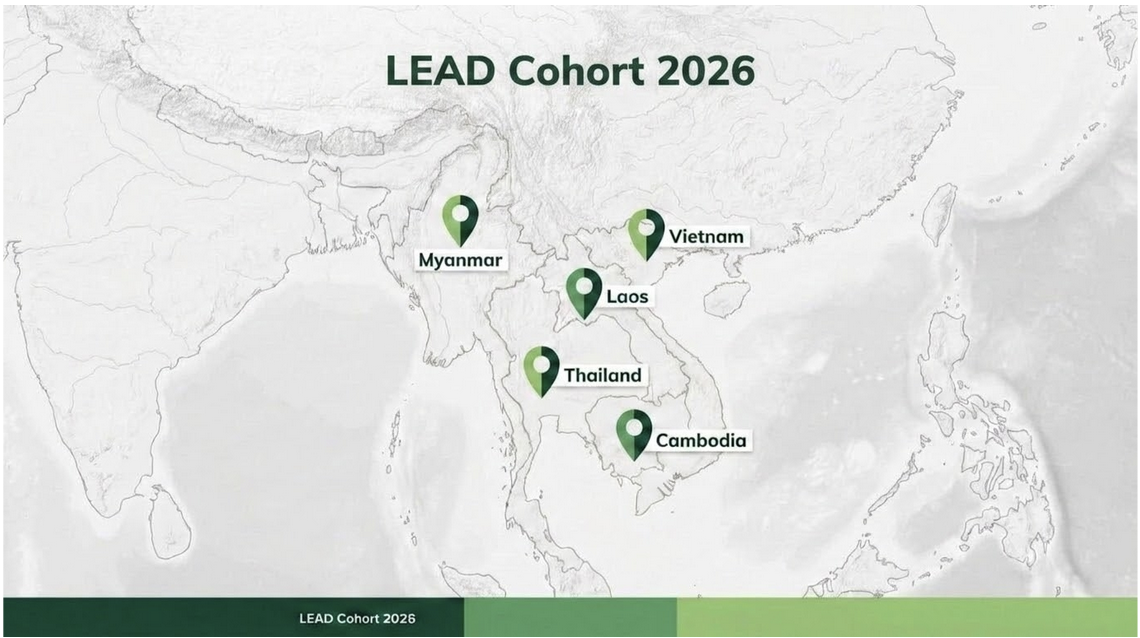
Participants joined our first session from Cambodia, Laos, Myanmar, Vietnam, and Thailand. Together we laid the foundations for future sessions. We began by reflecting on what makes a good learning space and arrived at a set of shared agreements centered on trust, inclusion, and mutual respect. As one participant from Laos shared,
"In my view, a great learning space needs to be inclusive and respectful — a place where everybody can comfortably talk, share knowledge, and learn from one another regardless of their background or profession." - Noy*
Together, the group then explored what they wanted to learn together, touching on a range of issues, including:
What does community-led mean?
How do we build trust and begin a community-led research project?
What are different methods used in community-led research?
How does community-led research empower communities?
How do we translate research findings into effective advocacy?
For example, one participant from Myanmar discussed the challenge when a community is navigating economic pressures that limit how people see their choices and the chances they are willing to take.
"I would like to know how to engage in that situation, to convince their interest, because the community is also willing to cooperate with the businessmen, because they have to solve their daily consumption or income." - Zayar*
In keeping with the commitment to collaboration and co-learning, the second session, held in April, addressed a theme that emerged in the first: how to build trust with communities. The substance of the session focused on the idea that you cannot simply arrive with a good idea and expect people to receive it. Communities have to want to be part of what you are building, and that means meeting people where they are — in their daily rhythms, their existing relationships and their immediate concerns.
Participants shared their own stories of how they cultivated trust in the communities where they work. One participant working in Myanmar described a practice of spending time with communities, eating with them, praying with them, focusing on what people know and have rather than formal project objectives.
"We just started with what they know. We didn't start at the high level. We started at the grassroots level, what they know and what they have." - Zayar*
Another participant from Myanmar, working with an Indigenous community in Thailand, described learning from community members about agricultural practices and approaching them as the experts. He is currently learning Thai so he can share a common language with community members, some of whom have also expressed a desire to learn English.
"I'm not an expert, I’m just learning from them. They're really proud and want to share. . . It's coming from the connection, not from the language. It's coming from the heart." - Aung Kyaw*
From Laos, a participant described a process of consultation with people the community already trusted, including religious authorities and village leaders, and ultimately letting the community make the decisions themselves on whether to get involved.
Reflecting on these first two sessions, we are also building trust, creating a space to share experiences and knowledge and build on it collectively. We look forward to continuing this learning together.
*We have used pseudonyms for security reasons.